AEO: what it is and how I built it into the system behind my websites
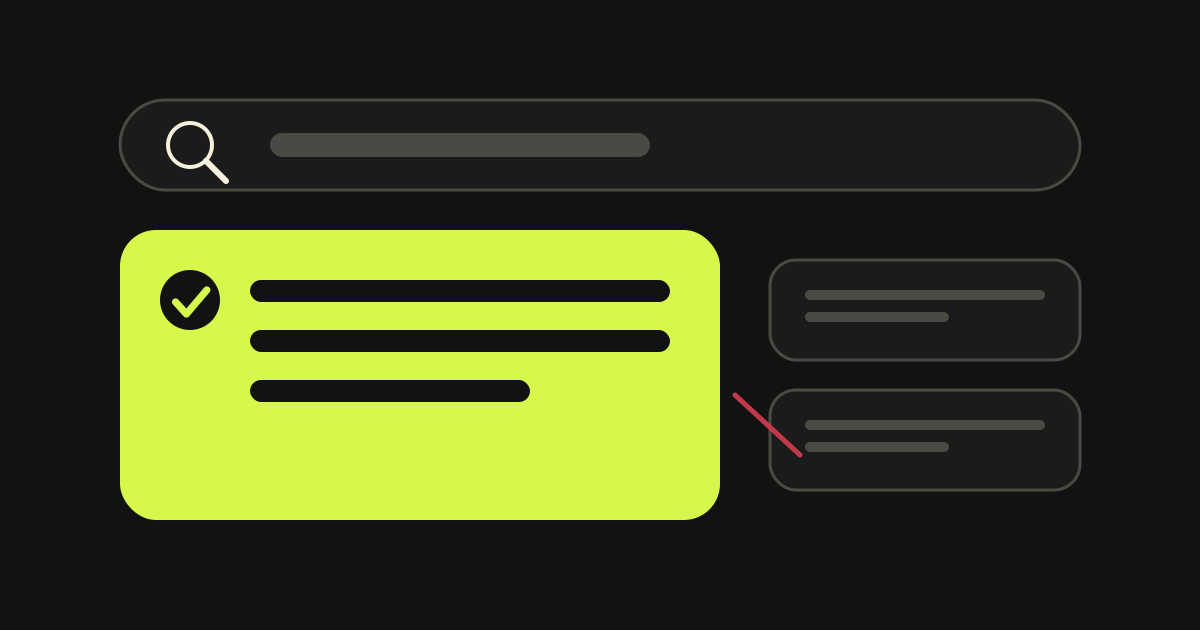
Picture a customer asking a chatbot: “How much does an online shop cost?”. They get the answer straight away and open no page at all. If the chatbot found it on your site, you were mentioned without anyone visiting. That is what AEO is about. Here I explain what it is and what I built into the content management system behind my websites, so that every page is ready for it from the moment it is written.
At a glance: AEO
- AEO is not a trick. It is text that starts with what matters and has headings that look like the questions customers ask
- Every page in the content management system behind my websites has ready-made fields for a summary, key facts and frequently asked questions
- Besides the text the visitor reads, every page has a complete and highly detailed, structured description for search engines and artificial intelligence (schema)
- Whatever the description (schema) says must also be in the text of the page, otherwise it is a mistake and not an improvement
What is AEO?
AEO (short for Answer Engine Optimization) is the way you write a page so that AI assistants and search engines can read it easily and quote it when someone asks a question. It does not change what the page is about. It changes the order and the clarity of the text.
It used to have a single goal: get the page to rank high on Google so that people would open it. That has not lost its value. But today a visitor often gets the information they wanted without opening anything. Whether the assistant quotes your page or your competitor's depends on how clearly it is written.
One thing does not change: the text has to be useful, correct and written for people.
How is AEO different from traditional SEO?
Traditional optimisation for Google, SEO, asks how to rank high in the results when someone searches for a word. AEO asks something else: which question does the page answer, and does it say so clearly? In SEO, the position of the page counts. In AEO, what counts is that someone can take the answer from the text.
| What we look at | SEO | AEO |
|---|---|---|
| Goal | Position in the results and visitors | The page is quoted when someone asks |
| The heading | The word people search for | The question, as the customer would put it |
| The opening | An intro that grabs attention | What matters, in the first two sentences |
| When it works | Many visitors arrive | You are quoted and the right visitors arrive |
They are not rivals. AEO builds on SEO. If Google has not indexed the page, or if it does not open properly, nobody will use it. First you make sure people can find it. Then you write it so that they use it.
What did I build into the content management system behind my websites?
I built the content management system behind my websites in Next.js, and SEO and AEO sit inside the form of every page and article. Whoever writes fills in the fields while writing the text, and the system checks, builds and sends the rest. These are the parts:
- AEO fields on every page. Answer summary, key facts, frequently asked questions, pros and cons, and keywords: one main and a few secondary ones.
- SEO fields on every page. Title and description for Google, title, description and image for sharing on social media, the main address of the page (canonical), and options for whether the page appears in the results and in the sitemap.
- Length check in characters and in pixels. Next to the title, the description and the alt text of every image, an indicator shows with colour whether the text fits in the Google result. The description needs 115 to 140 characters and at most 950 pixels of width. The indicator never blocks saving.
- Complete schema for each kind of page. The complete, structured description of the page (schema) is set per kind of content, for an article, a product or a service. I decide which information is sent: the page path, questions, author, dates, photos, price. The type of business is set too, and on a special page I can add my own code.
- One date of change. The update date changes only when the text changes. The schema, the sitemap and the notification to search engines (IndexNow) all read the same date.
- Sitemap, languages and redirects. The sitemap builds itself for all languages, with the versions of every page. When the address of a page changes or the page is withdrawn, a redirect is created automatically, and 404 errors are logged.
- Writing guide and import from Claude. Inside the editor of every kind of content there is the writing guide. I download a template with the values that exist in the database, give it to a Claude conversation, and upload the result. New texts always arrive as drafts, and I publish them myself.
The value is practical. On a site with dozens of pages, nobody has to remember what to add. The fields are right there, and a page without a summary shows at once that something is missing.
What is schema, and why must it match the text?
Schema is a complete and highly detailed, structured description of the page for search engines and artificial intelligence. The visitor does not see it. Every page has its own. It says what kind of page it is, who wrote it, when, and what it is about. Whatever it says must also be in the text of the page.
Think of the label on a box. The label says what is inside. If it says “books” and there are shoes inside, the label does not help. It confuses. It is the same here. If the schema mentions a question that is not on the page, it is a mistake, and Google may ignore it.
That is why nobody writes the schema by hand. It is built from the same information that whoever writes the page fills in, such as the title, the description, the dates and the author. So the text and the description cannot say different things, because they come from the same source.
How do you write a page that gets quoted?
You start from the customer's question and put the solution first. Then you split the text into sections with questions as headings, and every section opens with a complete paragraph that stands on its own. These are the steps I follow for every page.
- Find the main question of the page, as a person would ask it.
- Write the solution in the first two sentences and say clearly what the subject is.
- Split the rest into sections with questions as headings.
- Open each section with a paragraph of 40 to 60 words that is understandable on its own.
- Add a table or steps where the text needs them.
- Add the real questions customers ask at the end.
- Check that the schema says exactly what is visible on the page.
The test I use is simple. Read only the first paragraph of a section, as if you had found it by chance somewhere else. If you understand it, the section is ready. If you need the text before and after it, you rewrite it.
What mistakes do most people make when they want AEO?
There are three common mistakes. The page starts with an introduction instead of what matters. The headings are single words and not questions. And the frequently asked questions are written for the machines and not for the reader. All three can be fixed without changing what the page is about.
There is also a fourth, sneakier one: writing things in the schema that are not visible on the page, to make it look richer. It achieves nothing and can do harm.
Where does this show in my work?
The same system runs on all the websites I build, and the site you are reading is one example. Every article has key facts and questions, and all of them are visible on the page. Whoever writes a new article finds the fields ready and does not have to remember anything.
The Product Manager of Praion AI does the same job for the products of an online shop: it suggests titles, descriptions and questions, and the shop manager approves them. Praion AI is at praion.gr. If you want to talk about your own website, write to me. The article on how you keep an AI agent that writes production code under control shows the same thinking applied to another subject.
Frequently asked questions: AEO
No. AEO builds on it. First Google has to have indexed your page, and it has to open properly. Then you write the text so that it is clear and gets used. The two jobs complete each other.
About 40 to 60 words, so that it stands on its own. After that you write whatever is needed to explain the subject. The number does not matter in itself. What matters is that someone can read just that paragraph and understand.
No. The questions belong on the page they are about, as a section of frequently asked questions. A separate page for every question cuts the text into pieces that cannot stand on their own.
Sources: AEO
Last updated:
More articles: AEO
Quote Builder: quote, payment and project tracking in one app
The visitor builds a quote for a website, platform or cloud project alone, pays, and then follows the project in a client area of their own. The same app works for every company.
Praion AI Content Studio: text, images and video in one place
Text, images and video for a business’s posts, from the models that do each job best, in one place. Nothing is scheduled without your approval.
How to keep an AI agent that writes production code under control
The model is not the guarantee. The guarantee is three things: completion criteria that leave no room for interpretation, verification of every finding before it is accepted, and automatic rollback when a deployment fails. What I learned building Planner.